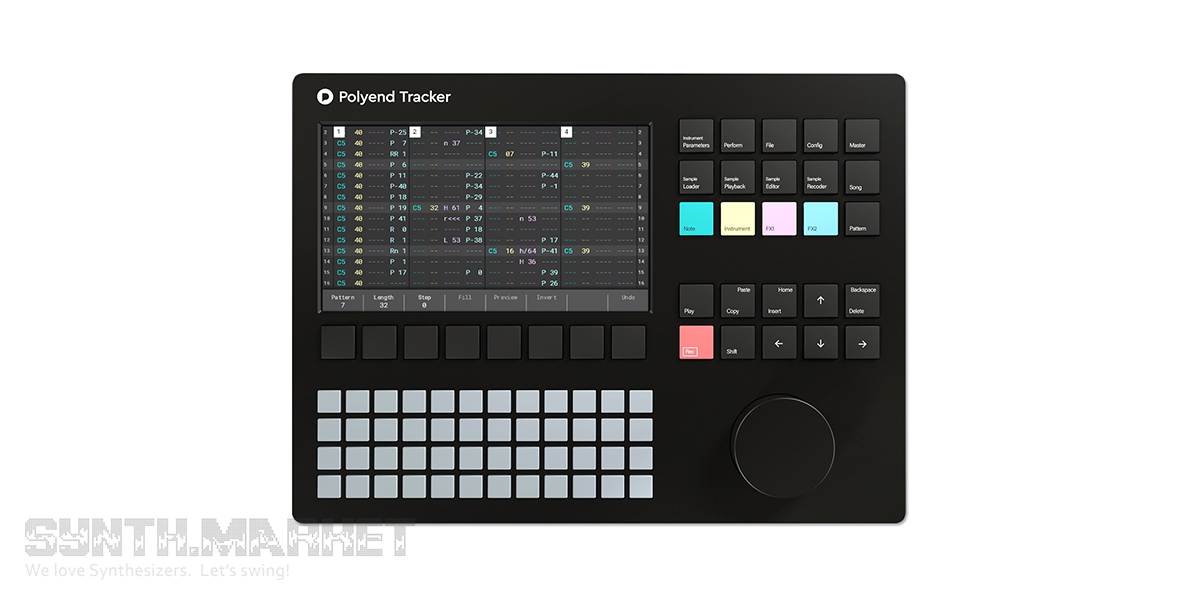
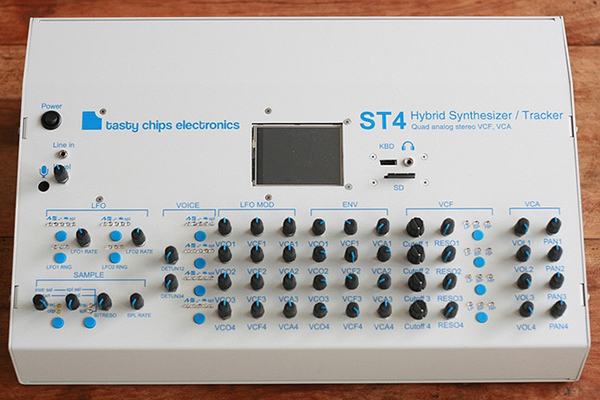
The Polyend Tracker represents a remarkable achievement in music technology: a modern hardware implementation of the classic tracker workflow that dominated computer music-making in the late 1980s and early 1990s. Trackers originated on home computers like the Commodore Amiga and Atari ST, using a distinctive vertical grid-based sequencing system that scrolled from top to bottom. What began with Ultimate Soundtracker and evolved through freeware versions like NoiseTracker and ProTracker has now been reimagined as a sleek, dedicated hardware instrument.
The Polyend Tracker maintains the efficiency and creative speed that made trackers beloved by generations of electronic musicians, while adding contemporary features and a carefully designed hardware interface. Housed in a compact aluminum enclosure, the device centers around a bright 7-inch color screen that handles programming, audio editing, and file management with clarity. The interface combines mechanical buttons for navigation, a large aluminum data encoder for value adjustment, and 48 white soft silicone keys arranged in a grid for chromatic playing and parameter selection.
Sampling & Sound Design Capabilities
The Tracker's sound engine revolves around sample-based synthesis with extensive manipulation options. The device provides 8MB of RAM for sample storage (approximately 130 seconds of mono audio at 44.1kHz), which can be doubled using a low-quality import mode that halves the sample rate. While this might seem limited by modern standards, it aligns with the tracker ethos of keeping projects streamlined and efficient. Users can load WAV files from the micro-SD card or record samples directly from multiple sources: line input, microphone input, or even an integrated FM radio that uses the line output cable as an antenna.
Once samples are loaded into one of 48 available instrument slots, they can be crafted into sophisticated instruments through various playback modes. Beyond simple one-shot playback, samples can be looped, sliced, or transformed into wavetable or granular sources. The wavetable mode slices samples into 2048-sample waveforms with LFO or envelope modulation of position, working particularly well with purpose-designed wavetables from software like Serum and WaveEdit. Granular playback chops samples into small looping windows, turning virtually any sound into evolving pad-like drones with position modulation creating timbral movement.
The sample editor includes a comprehensive suite of destructive effects: normalization, reverse, overdrive, fades, time-stretch, chorus, flange, EQ, bit crush, compression, and limiting. All effects can be previewed before application. Each instrument offers adjustable volume, panning, tuning, overdrive, bit-depth reduction, and filtering with dedicated low-, band-, and high-pass options. These filters can be modulated with dedicated envelopes or LFOs. Additional envelopes or LFOs (but not both simultaneously) are available for volume, panning, cutoff, wavetable position, granular position, and fine-tune parameters.
Two global effects—reverb and delay—are available as sends for each instrument, providing essential stereo width and depth to what might otherwise be a predominantly monophonic soundstage. The master section further includes an EQ, limiter with side-chain capability, and two single-parameter effects called Bass Boost and Space, all designed to shape the overall output into a more record-ready sound.
Pattern-Based Sequencing
The heart of the Tracker's uniqueness lies in its sequencing environment. A Tracker project contains a song with up to 255 patterns, each consisting of eight monophonic tracks with up to 128 steps. Each step can play one of the 48 loaded instruments and contains four pieces of information: note pitch, instrument number, and two FX parameters.
The FX system is where tracker sequencing truly shines. From a comprehensive list, users can select effects including volume, panning, tuning, gate length, swing, trigger probability (Chance), rolls, slides, randomizers, sample reverse, slice selection, sample start position, filtering, delay, and reverb send. These per-step effects enable incredibly detailed sequence manipulation without the complexity required in traditional MIDI sequencing.
Particularly powerful are effects like Rolls, which create snare rolls or glitch effects by repeating notes at specified rates (with optional velocity ramping) without manually programming each hit. The Glide effect provides per-note portamento without requiring synthesis-level configuration—it simply works on any note, with individually adjustable slide speeds. This represents a fundamental advantage of tracker sequencing: complex performance behaviors become simple per-step parameters.
The vertical spreadsheet-style editing interface provides constant visibility across all eight tracks simultaneously, allowing producers to understand the entire arrangement context while editing individual parts. Movement between tracks is instantaneous without changing windows or views. Data can be entered manually using the encoder and navigation keys, recorded in real-time from MIDI keyboards (with optional micro-timing and velocity recording), or generated algorithmically using the Fill function, which can populate selected ranges with notes, instruments, or FX values based on scales, ranges, and probability rules.
Additional editing functions include pattern copy/paste, shrink/expand (halving or doubling pattern duration), duplicate (doubling length and copying contents), invert (reversing step order), and Render Selection, which bounces the current selection to a new sample for on-the-fly remixing. The last 20 edits are stored in an undo buffer.
MIDI Integration
The Tracker can sequence external MIDI instruments through 16 MIDI channels accessible at the end of the instrument pool. Selecting a MIDI channel instead of an internal instrument dedicates that step to external gear, reducing available polyphony. The Volume FX controls MIDI velocity, while specialized FX can send Control Changes, Aftertouch, and Program Changes. A MIDI Chord FX plays triads in a single step using numeric codes. The USB and 3.5mm MIDI outputs cannot be addressed separately, so connected devices must use different MIDI channels to avoid playing in unison. While not designed for orchestral scoring, the MIDI implementation handles basic external sequencing duties like drum machine pattern changes and simple bass lines effectively.
Song Mode & Performance Features
Song mode chains patterns into complete arrangements by creating a playlist of pattern slots. Each slot represents a single pattern, and patterns can be repeated by adding multiple slots. Although tempo is set globally, the Tempo FX can override this on a per-step basis within patterns, allowing for dynamic tempo changes throughout a song. Song mode can toggle between playing through the pattern playlist sequentially and looping the current pattern indefinitely, creating a foundation for live performance with predefined structure and improvisational flexibility.
The dedicated Performance page elevates the Tracker's live capabilities significantly. It centers on 12 manipulable parameters: volume, panning, tune, low/high/band-pass cutoff, delay send, reverb send, sample position, sample end, sample playback direction, and volume LFO speed. Each parameter can be assigned three offset values, triggered using the 48 silicone keys. The top row triggers normal playback while the three rows below activate offset values, enabling instant pattern transposition, filter sweeps, or effect modulation.
Eight soft-keys enable or disable individual tracks from performance offset control and can mute tracks entirely for breakdowns. Perhaps most powerful is the track-swapping feature: holding a soft-key while scrolling the encoder allows any track to play back from a different pattern. With five patterns loaded, this creates vast combinatorial possibilities—kick and snare from one pattern, bass from another, leads from a third. Entire live sets can be performed from Performance mode alone, with track organization allowing gradual builds and variations. Performance tweaks persist when switching between Performance mode and instrument editing, and the Line input accepts external instruments with mixer-level control.
Workflow & Export Options
The Tracker excels at immediate creative engagement. Its self-contained nature means producers can quickly move from inspiration to finished music without navigating complex routing or external dependencies. Once songs are complete, comprehensive export options facilitate DAW integration: full song mixdowns, eight-track stems (including separate delay and reverb sends plus stereo master), or individual pattern renders — all at 16-bit, 44.1kHz resolution. Files transfer via the micro-SD card for import into any DAW for final mixing and mastering.
The device includes several thoughtful touches: an auto-naming function generates whimsical sample names like "soggy frogs" or "acid ladybug" for those who dislike file organization; hexadecimal numbering can be enabled for authentic 1990s tracker experience; a version 1.4 update added horizontal pattern arrangement for users uncomfortable with vertical scrolling; and remarkably, a complete Nintendo Entertainment System emulator resides in the Games folder, turning the device into a retro gaming system for travel entertainment.
Musical Context & Legacy
Far from being simplistic chiptune generators, trackers have spawned complex musical genres and influenced countless producers. Jungle, rave, IDM, glitch, breakcore, electronica, and techno all owe debts to tracker workflows. Albums like "Claro" by Brothomstates and "Rossz Csillag Alatt Született" by Venetian Snares demonstrate the depth and beauty achievable with tracker composition. Contemporary artists including Aphex Twin, Legowelt, Richard Devine, Cristian Vogel, and John Tejada incorporate trackers into their production palettes.
The Polyend Tracker succeeds as both a nostalgia piece for those who grew up with Amiga trackers and a forward-thinking instrument for modern electronic music production. Its limitations — eight monophonic tracks, single stereo output, MIDI integration that consumes voice count — reinforce its self-contained nature rather than undermining it. The device functions best as a complete composition environment rather than a component in a larger ecosystem, though this focused design contributes to its immediacy and creative efficiency.
Special Artist Edition Trackers were released in April 2021, limited to 300 units each, featuring custom artwork and song projects from Legowelt, Bogdan Raczynski, and Pete Cannon (song projects remain available for download from Polyend's website). The device can import classic IT and MOD tracker files, preserving samples, instruments, patterns, song structure, and volume information, and can export IT files for compatibility with vintage systems.
Technical Specifications
Audio Engine
- Sample Rate: 44.1kHz
- Sample Format: Mono (stereo files automatically converted)
- Sample Memory: 8MB RAM (approximately 130 seconds)
- Low-Quality Import: Available (halves sample rate to double capacity)
- Bit Depth: 16-bit audio export
- Maximum Instruments: 48 per project
- Polyphony: 8 voices (monophonic tracks)
Sequencing
- Maximum Patterns: 255 per project
- Tracks per Pattern: 8 monophonic tracks
- Maximum Pattern Length: 128 steps
- Step Parameters: Note, Instrument, FX1, FX2
- Undo Buffer: 20 edit levels
Playback Modes
- One-shot
- Loop
- Slice
- Wavetable (2048-sample waveforms with modulation)
- Granular (windowed looping with position modulation)
Sample Effects (Destructive)
- Normalize
- Reverse
- Overdrive
- Fade in/out
- Time-stretch
- Chorus
- Flange
- EQ
- Bit crush
- Compression
- Limiting
Instrument Parameters
- Volume (with envelope/LFO)
- Panning (with envelope/LFO)
- Tuning/Fine-tune (with envelope/LFO)
- Overdrive
- Bit-depth reduction
- Filtering: Low-pass, Band-pass, High-pass
- Filter cutoff (with envelope/LFO)
- Wavetable position (with envelope/LFO)
- Granular position (with envelope/LFO)
Global Effects
- Reverb (send per instrument)
- Delay (send per instrument)
- Master EQ
- Master Limiter (with side-chain)
- Bass Boost
- Space
FX Parameters (Per-Step)
- Volume
- Panning
- Tuning
- Gate length
- Swing
- Trigger probability (Chance)
- Rolls (with velocity ramping options)
- Slides/Glide
- Randomizers
- Sample reverse
- Slice selection
- Sample start position
- Filter cutoff
- Delay send
- Reverb send
- Tempo (pattern-level override)
MIDI Capabilities
- MIDI Channels: 16 (at end of instrument pool)
- MIDI FX: Velocity (via Volume FX), Control Change, Aftertouch, Program Change, Chord (triads)
- MIDI I/O: 3.5mm jack In/Out, USB Type-C bidirectional (class-compliant)
- Note: USB and 3.5mm MIDI outputs cannot be addressed separately
Connectivity (Rear Panel)
- USB Type-C: Power and bidirectional class-compliant MIDI
- Stereo Line Output: 3.5mm jack
- Stereo Line Input: 3.5mm jack
- Mic Input: 3.5mm jack
- MIDI In/Out: 3.5mm jack
- Power Button
- Micro-SD Card Slot: For sample storage, project files, and WAV import/export
Recording Sources
- Line input (stereo, converted to mono)
- Mic input
- FM radio (uses line output cable as antenna)
Performance Mode Features
- Manipulable Parameters: 12 (volume, panning, tune, 3x filter cutoff types, delay send, reverb send, sample position, sample end, sample playback direction, volume LFO speed)
- Offset Values: 3 per parameter (triggered via grid keys)
- Track Control: Individual enable/disable per track, track muting
- Pattern Remixing: Track-swapping between patterns in real-time
Song Mode
- Pattern chaining with unlimited slots
- Global tempo setting with per-pattern override
- Toggle between sequential playback and pattern loop
- Track usage overview display
Export Options
- Full song WAV mixdown (16-bit, 44.1kHz)
- Song stems: 8 mono tracks + delay send + reverb send + stereo master
- Single pattern WAV mixdown
- Single pattern stems
- IT file export (for legacy tracker compatibility)
Import Capabilities
- WAV files (mono/stereo, auto-converted to mono)
- Wavetables (standard format, compatible with Serum, WaveEdit)
- IT tracker files (instruments, samples, patterns, song structure, volume)
- MOD tracker files (instruments, samples, patterns, song structure, volume)
Additional Features
- Sample trimming and editing
- Auto-naming function for samples
- Algorithmic Fill function (notes, instruments, FX with scale/range/probability)
- Pattern functions: Copy/Paste, Shrink/Expand, Duplicate, Invert
- Render Selection (bounce to new sample)
- Hexadecimal numbering option
- Horizontal pattern arrangement option (v1.4+)
- Micro-timing recording (off-grid note capture)
- Velocity recording option
- Complete NES emulator with ROM support
Storage
- Micro-SD card for all file operations
- Project file format: Tracker-specific
- Audio file format: WAV (16-bit, 44.1kHz export)
Display
Controls
- Large aluminum data encoder
- mechanical navigation buttons
- 48 soft silicone keys (grid)
- 8 soft-function keys
Power
Physical Dimensions
- Size: 282 x 207 x 33mm
- Build: Aluminum enclosure with mechanical buttons and soft silicone keys
Special Editions
- Artist Edition Trackers (Limited to 300 units each)
- Legowelt edition
- Bogdan Raczynski edition
- Pete Cannon edition
- Includes custom artwork and artist-created song projects
- Song projects available for download from Polyend website